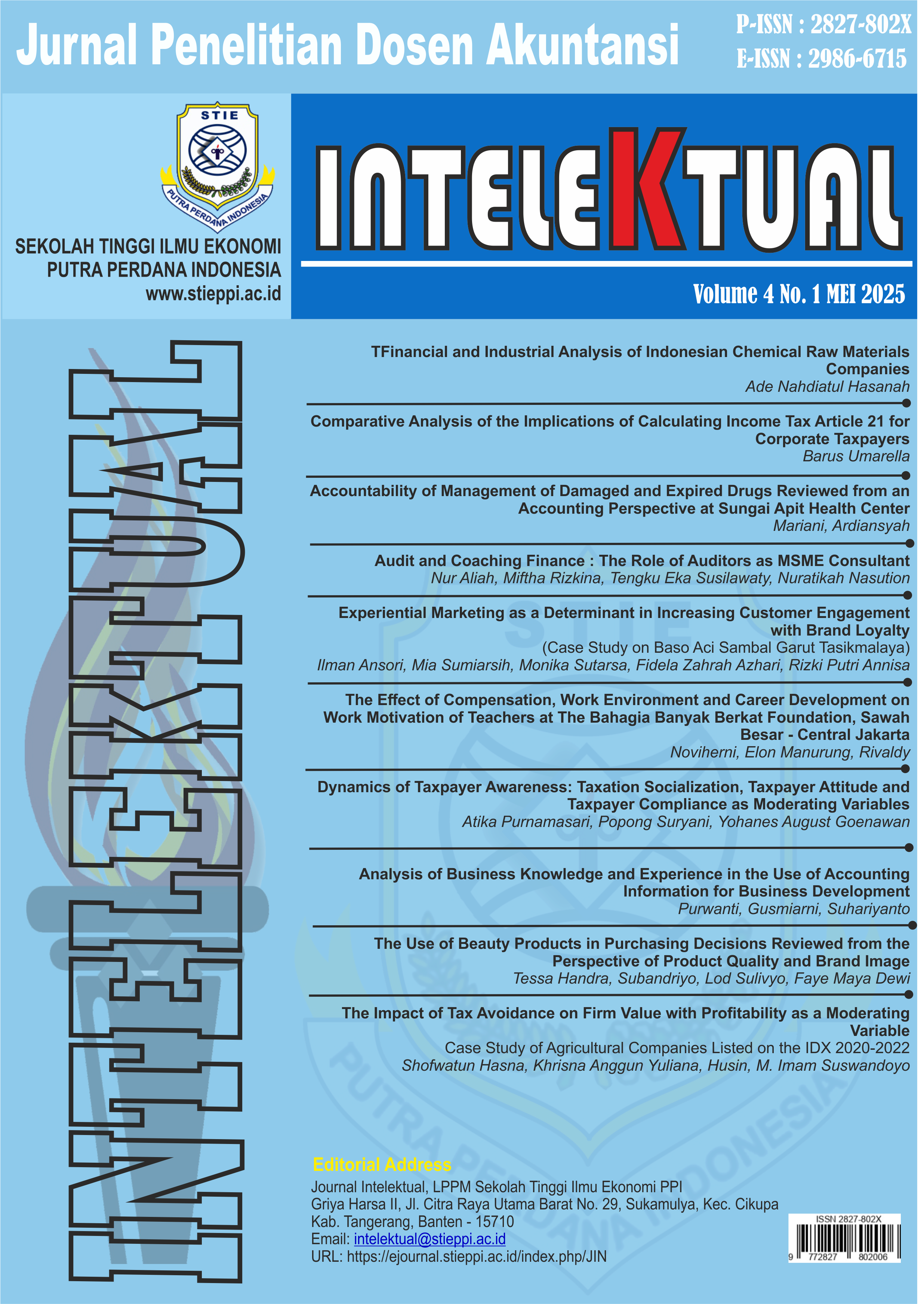
Comparative Analysis of the Implications of Calculating Income Tax Article 21 for Corporate Taxpayers
DOI:
https://doi.org/10.61635/jin.v4i1.202Keywords:
income_tax, net_and_gross-up_methods, tax_efficiency, corporate_tax_burden, corporate_profitAbstract
Introduction/Main Objectives: Companies as employers have a central role in calculating, deducting, and depositing taxes where there are PPh Article 21 calculation methods—namely the net, gross, and gross-up methods—each of which has a different impact on the tax obligations and burdens borne by the company. Background Problems: This study examines the comparison between the net and gross-up methods in calculating PPh Article 21 and their impact on the company's profit and Corporate Income Tax obligations at PT XYZ. Novelty: The uniqueness of this study lies in the simultaneous analysis between the selection of PPh Article 21 calculation methods and its impact on the company's profit and Corporate Income Tax obligations. Research Methods: This study uses a qualitative descriptive approach, with data collection through documentation of financial reports and tax policies implemented by PT XYZ in 2023. The analysis was carried out by comparing two PPh Article 21 calculation methods to determine their implications for the company's profit and Corporate Income Tax obligations. Findings/Results: The results of the study show that during 2023, PT XYZ applies the net method in calculating Income Tax Article 21. Conclusion: The importance of evaluating the calculation strategy for Article 21 Income Tax by companies in order to optimize tax efficiency legally and appropriately
Downloads
Published
Issue
Section
License
Copyright (c) 2025 Barus Umarella

This work is licensed under a Creative Commons Attribution-ShareAlike 4.0 International License.